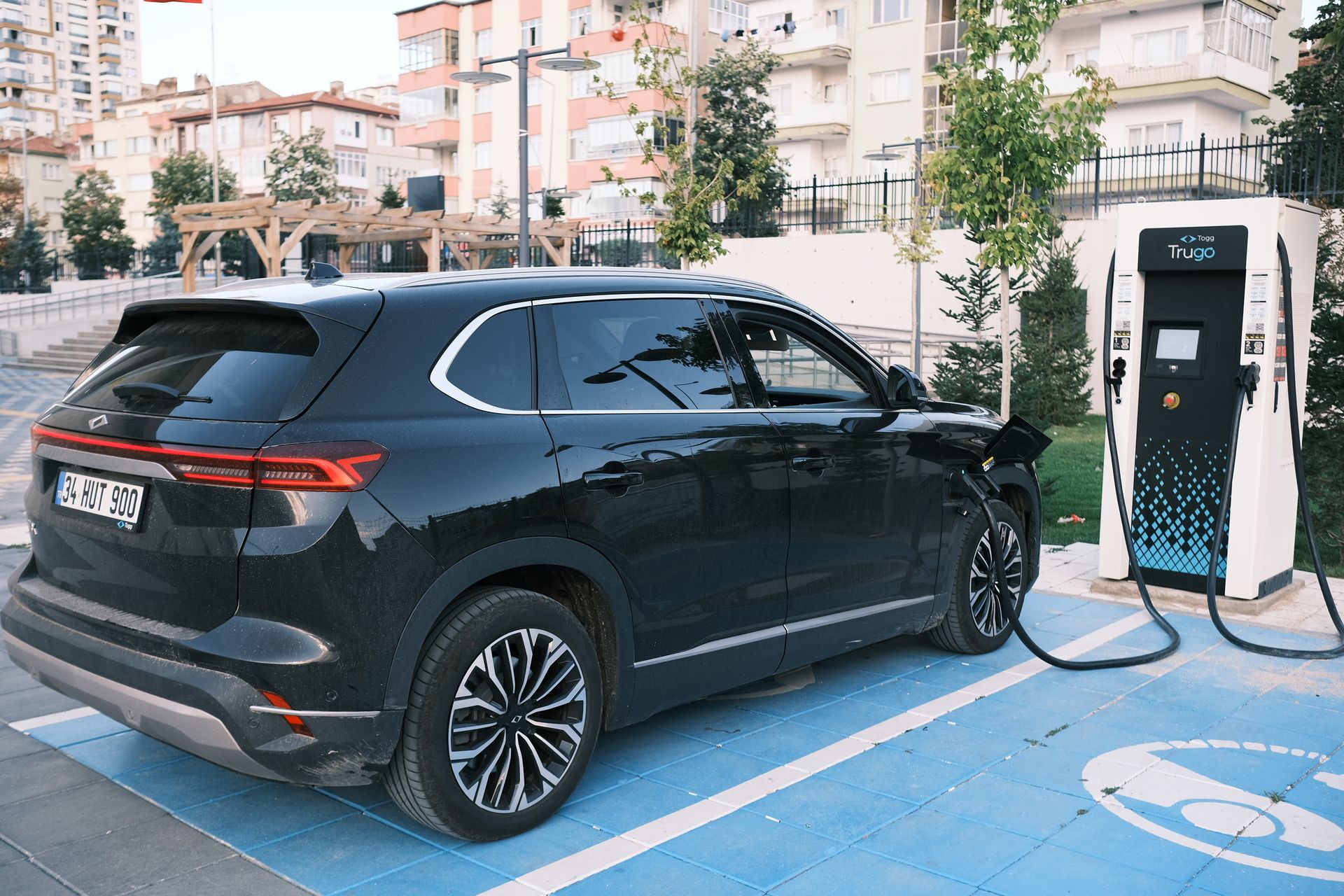
Electric SUV charging comes down to one habit for most owners: plugging in at home overnight and starting each day with a full battery. The equipment behind that habit is simple to understand, but the choices carry real cost differences, and a large SUV battery changes the math compared with a small hatchback. Getting the setup right the first time saves money and daily frustration.
An electric SUV usually carries a bigger battery and uses more energy per mile than a compact car. That combination shapes every charging decision, from the type of charger that makes sense to how long a full charge takes.
How electric SUV charging works
Charging splits into three power levels, and only two matter at home. The U.S. Department of Energy’s Alternative Fuels Data Center, in its guide to charging at home, explains that most owners charge overnight using Level 1 or Level 2 equipment.
Level 1 uses a standard 120-volt household outlet and the cable that comes with the car. It is the slowest option, adding only a few miles of range per hour. Level 2 uses a 240-volt circuit, the same kind a clothes dryer uses, and charges several times faster. The third level, DC fast charging, is the high-power equipment found at public stations, and it is not something installed in a home.
For a small electric car driven short distances, Level 1 can be enough. For an electric SUV with a large battery, it often is not, which is where the real decision begins.
Level 1 or Level 2, and what an electric SUV needs
The gap between the two home options is wide. Level 1 might add roughly five miles of range in an hour. An electric SUV that returns home with a nearly empty battery could take more than a full day to refill at that rate, which does not work for regular driving.
Level 2 changes that. A 240-volt charger can refill most electric SUVs overnight, and speed scales with the amperage of the circuit. Common Level 2 units run from about 3.8 kilowatts at 16 amps up to around 11.5 kilowatts at 48 amps. The practical takeaway is that an electric SUV used daily almost always needs Level 2 charging to be convenient, while Level 1 works only for light use or as a backup.
One point saves money here. Charging speed is capped by the lower of two numbers: the charger’s output and the car’s onboard charger. A 50-amp charger does not deliver faster charging if the SUV only accepts 32 amps, so the vehicle’s specification matters as much as the equipment.
What a home charger costs to buy and install
The charger itself is the smaller cost. Most Level 2 home units sit in a few hundred dollars. ChargePoint Home Flex is one example of a widely used Level 2 charger, with adjustable amperage and the option to plug in or hardwire. Treat it as a reference point, not a recommendation, and compare a few models on amperage, cable length, and warranty before buying.
Installation is where the numbers move. If a suitable 240-volt outlet already sits near the parking spot, a plug-in charger can go in for very little. If not, a licensed electrician has to run a new circuit, and the price depends on the distance to the panel and whether the panel has spare capacity. A panel upgrade, if one is needed, is the expensive part.
Two safety points are not optional. The Department of Energy’s guidance on charging advises using a dedicated circuit for home charging and warns against using an extension cord, because standard cords cannot handle the load and raise the risk of fire. State and utility incentives can offset some of the equipment and installation cost, so checking local programs before buying is worth the few minutes it takes.
Cutting the cost of electric SUV charging
The cost of electric SUV charging at home is usually lower per mile than fueling a gasoline model, and a few habits push it lower still. The main levers:
- Charge on off-peak hours. Many utilities price overnight power well below daytime rates, and most Level 2 chargers can schedule charging for the cheapest window
- Right-size the charger to the car and the home, rather than paying for amperage the SUV cannot use
- Check for federal, state, and utility incentives on both the charger and the installation
- Keep daily charging to a sensible ceiling, since topping up regularly is easier on the battery than running it flat and refilling
The largest savings come from the off-peak habit and from not overbuying hardware. Efficiency plays a longer game too: choosing among the electric SUV models with the best range means fewer kilowatt-hours per mile and a lower charging bill over the life of the vehicle.
Frequently asked questions
How long does it take to charge an electric SUV at home?
It depends on the battery size, the charger, and the car’s onboard limit. Level 1 can take more than a day for a large, depleted SUV battery. A Level 2 charger typically refills an electric SUV overnight, often in eight to ten hours from low to full.
Can an electric SUV charge on a normal wall outlet?
Yes, through Level 1 on a standard 120-volt outlet, but slowly. That works for short daily distances or as a backup. For an electric SUV driven regularly, a 240-volt Level 2 charger is the practical choice.
How much does electric SUV charging cost at home?
The cost depends on the local electricity rate and how efficient the SUV is. Home charging is generally cheaper per mile than gasoline, and charging on off-peak rates lowers it further. Larger SUV batteries cost more for a full charge than small electric cars, so efficiency matters.
Does installing a home charger require an electrician?
For Level 2, usually yes. Running a new 240-volt circuit is electrical work that should be done by a licensed electrician, both for safety and to meet code. Level 1 needs only a dedicated standard outlet, though even that is worth an electrician’s check on older wiring.