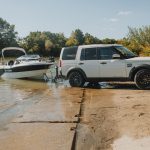
Shipping an SUV across the country costs more than shipping a sedan, and the reason is simple physics. Auto haulers sell space and weight, and an SUV takes more of both. A full-size three-row model can push a quote several hundred dollars above what a compact car would cost on the same route.
Most people arrange this once, under time pressure, after buying a vehicle out of state or relocating for work. That combination makes it easy to overpay or hand money to a company that never picks the vehicle up. The process is manageable once the structure of the industry is clear.
What it costs to ship an SUV
Price comes down to distance, vehicle size, trailer type, route, and season. Per-mile rates fall as distance rises, so a coast to coast move costs more in total but less per mile than a short hop.
For a rough sense of scale, open transport for a standard vehicle commonly runs somewhere between 0.75 and 1.50 dollars per mile, with most nationwide shipments landing in the range of 800 to 1,500 dollars. An SUV sits at the higher end of whatever band applies to its route because of size and weight.
Several factors push a quote up:
- Vehicle size and weight, where a full-size SUV costs more than a compact crossover
- Enclosed rather than open transport, typically a significant premium
- Rural pickup or delivery, since carriers prefer routes near major highways
- Peak season, usually May through September, and snowbird routes in autumn and spring
- A non-running vehicle, which needs a winch and specialised handling
- Lift kits, roof racks, and oversized tires, which change the vehicle’s dimensions and can trigger a surcharge
That last point catches SUV owners specifically. A lifted vehicle takes more vertical space on a trailer, and a carrier that quoted for a stock model may re-price on arrival. Declaring modifications at the quote stage avoids that argument.
Brokers and carriers are not the same thing
This distinction matters more than any other in the industry, and most first-time shippers never learn it.
A carrier owns trucks and moves vehicles. A broker does not own trucks. A broker takes the booking, then finds a carrier from a network to run the route. Most companies advertising car shipping online are brokers, and that is not inherently a problem. Brokers have reach a single carrier cannot match, which is how a vehicle gets moved between two cities no one trucking company serves directly.
Montway Auto Transport is one example of a large US broker, founded in 2006 and working through a network of thousands of vetted carriers, with open and enclosed options and an instant online quote. Treat it as one quote among several rather than a default. Sherpa, AmeriFreight, SGT, and Easy Auto Ship compete for the same shipments, and prices vary enough between them to justify comparing three.
The broker model has a real drawback. The company taking payment is not the company driving the truck, so service quality depends on which carrier accepts the load. Deposits are also usually broker fees, which is why refund terms deserve reading before booking.
Verifying a company before paying anything
Auto transport is federally regulated, and the verification tools are free. Any company moving or brokering vehicles across state lines needs operating authority from the Federal Motor Carrier Safety Administration, along with a USDOT number and usually an MC number.
Those numbers can be checked against the FMCSA SAFER system, which provides a free company snapshot covering identification, size, safety record, and operating status. A company that will not give its USDOT number, or whose authority shows as inactive, is a company to walk away from.
The complaint history is the second check. FMCSA’s National Consumer Complaint Database accepts and tracks complaints against motor carriers, brokers, and auto haulers specifically, and the agency uses that record to decide which companies to investigate.
One honest caveat worth knowing. The detailed consumer protections FMCSA applies to household goods moves, including the rights booklet and rules on holding shipments for payment, are written for household goods rather than vehicle transport. Car shipping sits under lighter consumer rules, which puts more weight on checking the company beforehand.
Insurance, inspection, and the delivery paperwork
Carriers are required to hold cargo insurance, and reputable ones state their coverage limits upfront. Coverage commonly runs up to around 100,000 dollars on standard land transport, sometimes higher for enclosed service. Personal auto insurance may also extend to a vehicle in transit, which is worth confirming with the insurer rather than assuming.
The document that protects the owner is the bill of lading. At pickup, the driver inspects the SUV and records existing damage. At delivery, the vehicle is inspected again against that record. Any new damage has to be noted on the bill of lading before signing, because a signed clean delivery receipt makes a claim far harder to pursue.
Practical steps that reduce disputes:
- Photograph the SUV from every angle in good light, with timestamps, before pickup
- Photograph the odometer and the interior
- Remove personal items, since they are usually not covered and add weight
- Leave about a quarter tank of fuel, enough to load and unload without extra weight
- Fold or remove roof accessories where possible, and disable toll transponders
- Inspect carefully at delivery, in daylight if at all possible, and note anything new before signing
- Keep the bill of lading, since it is the primary evidence in a claim
Shipping is often the sensible choice when buying a used SUV from another state, where the alternative is a long drive in an unfamiliar vehicle. That decision pairs well with running a proper background check first, since an SUV history report costs far less than freighting home a vehicle with a branded title.
Frequently asked questions
How much does shipping an SUV cost?
Most nationwide shipments land between roughly 800 and 1,500 dollars, with SUVs at the upper end of the range for their route because of size and weight. Short trips cost less in total but more per mile. Enclosed transport, rural addresses, peak season, and modifications all raise the price.
Is open or enclosed transport better for an SUV?
Open transport is the standard choice and suits most SUVs. The vehicle is exposed to weather and road debris, much as it would be driving the same route. Enclosed transport costs substantially more and makes sense for classic, luxury, or heavily modified vehicles where paint and finish justify the premium.
How long does shipping an SUV take?
Roughly one to two weeks coast to coast, and a few days for shorter regional routes, plus a pickup window rather than a fixed date. Delivery dates are usually estimates, since weather, traffic, and route changes all affect the schedule.
Can personal belongings be left in the SUV?
Most carriers discourage it and many prohibit it. Items in the vehicle are generally not covered by the carrier’s cargo insurance, and the extra weight can affect the load. Some companies permit a limited amount of luggage in the cargo area, so it is a question to ask rather than assume.